• Home
  • Latest News
  • I've Got a Secret
  • Arts Section
  • Event Calendar
  • Neighborhoods

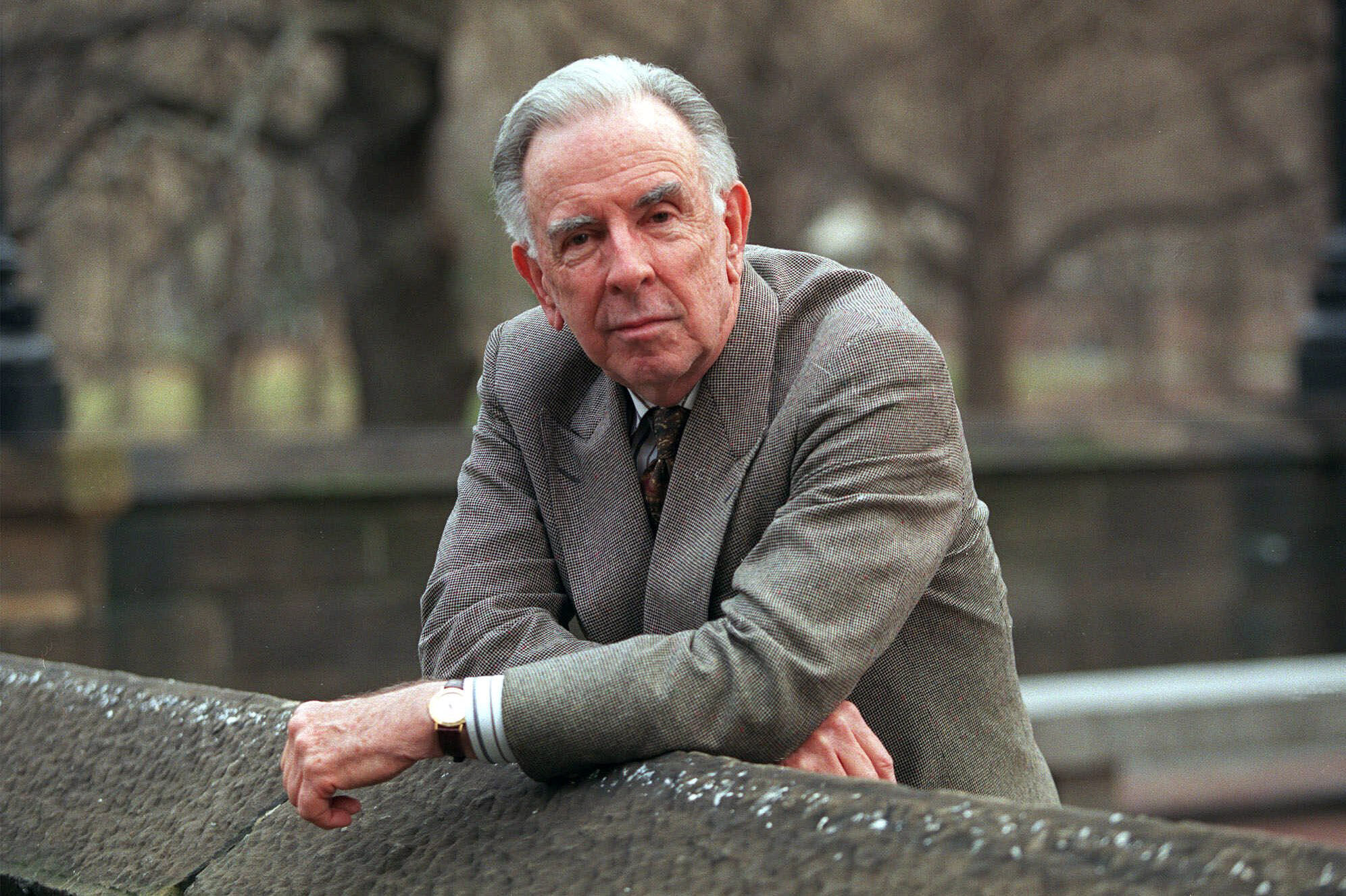
Since moving here in 2000, Paul has occupied a front row seat for Our Town's flourishing music and dance scene - often literally. He brings a lifetime of experience to the job, and a national reputation as arts critic, both in print and online. The former music and dance critic for The Kansas City Star has written for numerous publications and has done musicological research throughout Europe. He loves travel, film, museums, and literature of the American South.

REVIEW: KC Ballet presents varied program that reveals much about American dance

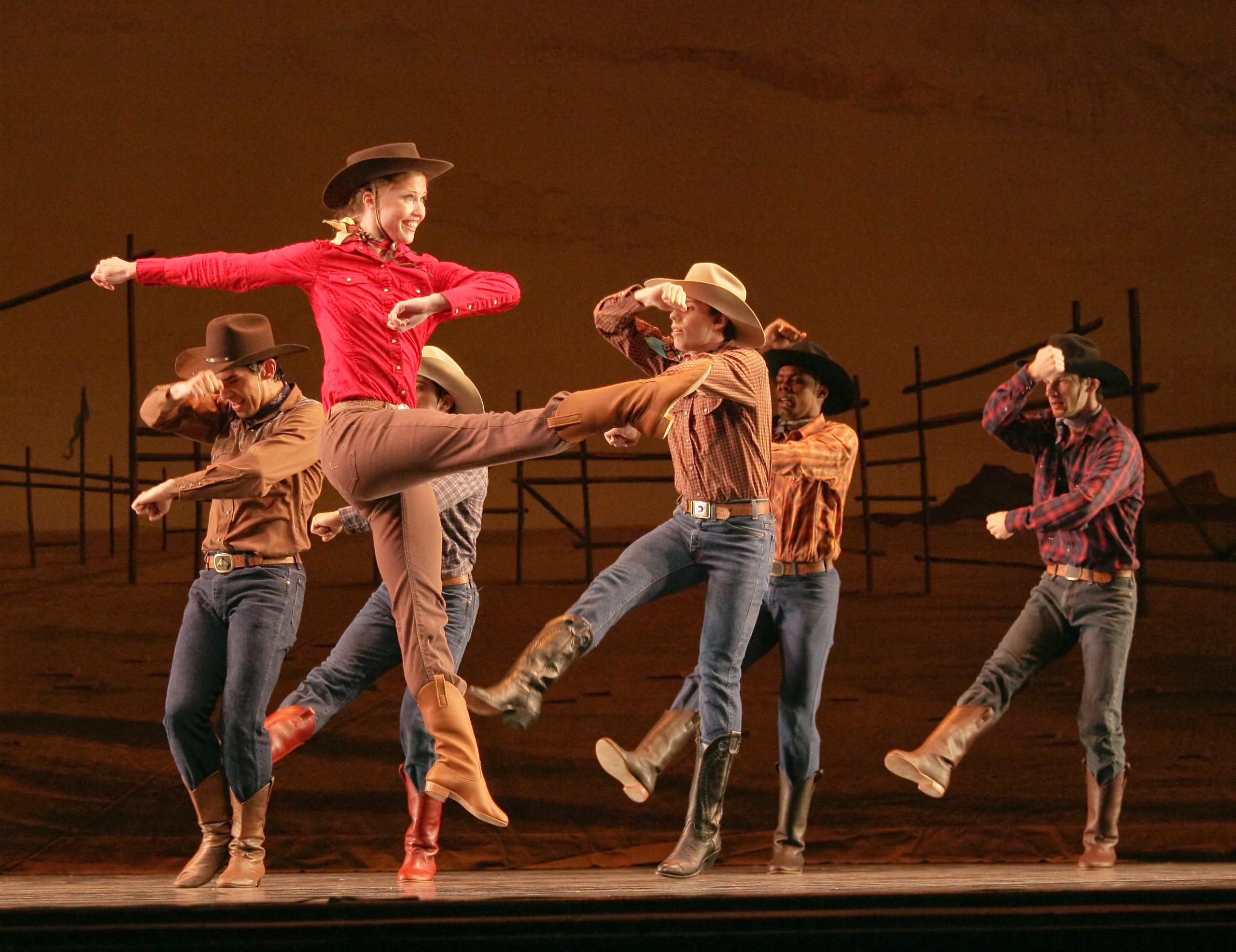
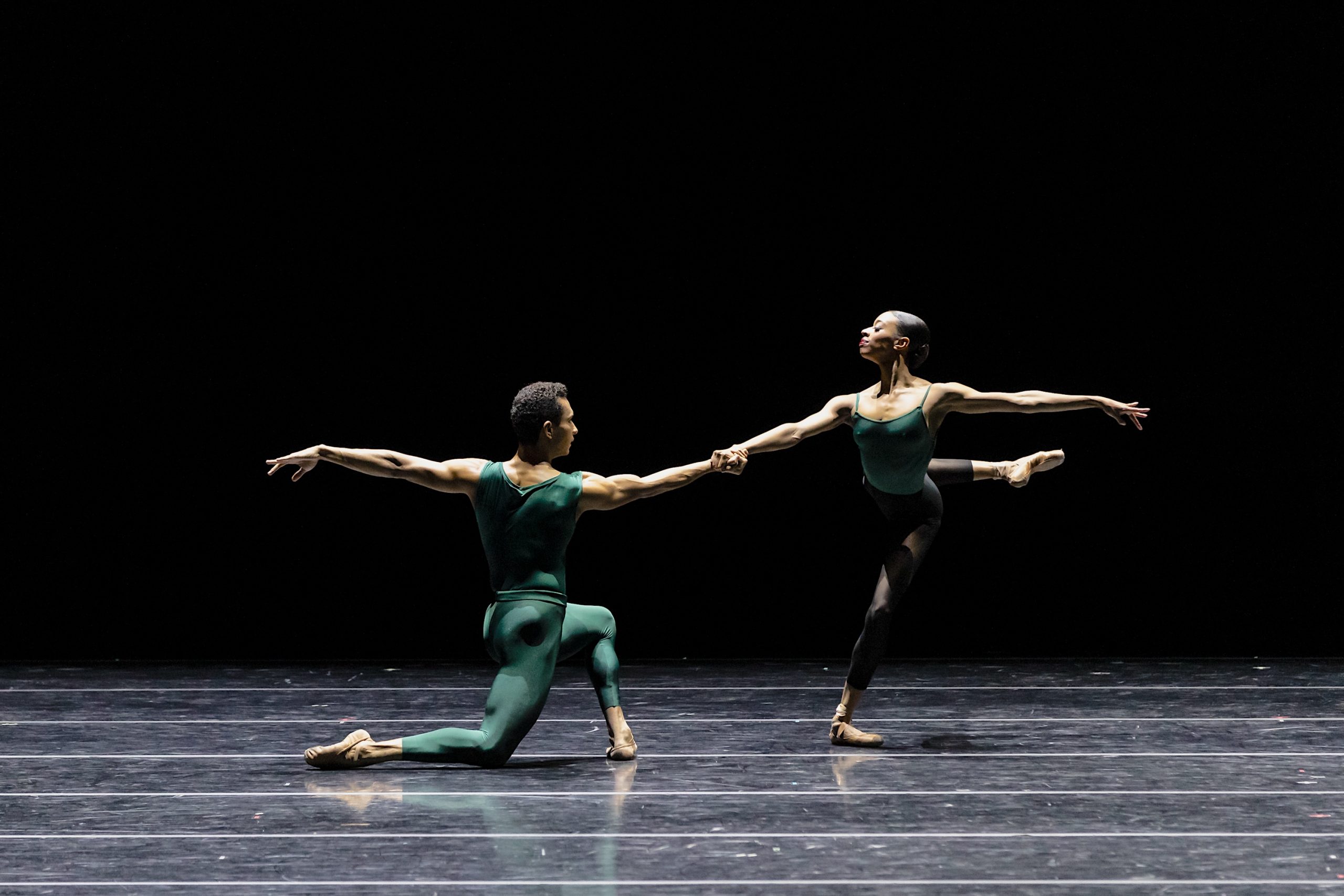
When a ballet audience gasps audibly at the sheer “look” of a piece, before the dancers have made a single move, you know you’re in for a ride. When the curtain went up on George Balanchine’s Serenade, the opening piece of the Kansas City Ballet’s final 2011-2012 production, the translucent azure lighting and ballerinas frozen in a tilted port de bras immediately warmed us to the classical beauty of this first American piece by the Russian-born choreographer. The KCB’s program, like the rest of its inaugural Kauffman Center season, was a fine balance of the classical ballet on which the company was founded with more striking contemporary takes on that heritage. Masters of American Dance included, in addition to Serenade, three pieces that revealed various traditions that have made American dance unique, as well as calling to attention the KCB’s role in these traditions.

Serenade features many of the striking symmetrical patterns common to so many of Balanchine’s works, such as Kimberly Cowen downstage center with four rows of three dancers each emanating from her upstage like beams of light. It is grounded in the Russian tradition the choreographer knew so well, yet it is amazing to see how much innovation is contained already in this piece from 1935 – such as the Tayloresque lifts from the thighs, or the “grounded” pas de deux that seems to fulfill, not defy, classical “airiness.” Kimberly was transcendent in her solos, her smartly precise movements looking as heartfelt as ever after 20 years of dancing with the company. Every time she entered the stage you could feel a special energy flow from her and out into the audience.

Afternoon of a Faun, Jerome Robbins’ brief classic to Debussy’s music, is an inward duet in which two dancers seem to want to interact but can’t seem to take their eyes off their own images in the mirror. The “fourth wall,” namely the audience, is the mirror, and the moment the dancers take their eyes off of us and look at each other is mildly startling. On opening night (May 4th) Logan Pachciarz was the slumbering “faun” and Rachel Coats his haughty partner; they brought quiet energy to the piece. (The lighting design/recreation here, as throughout the evening, was by the gifted Kirk Bookman.)

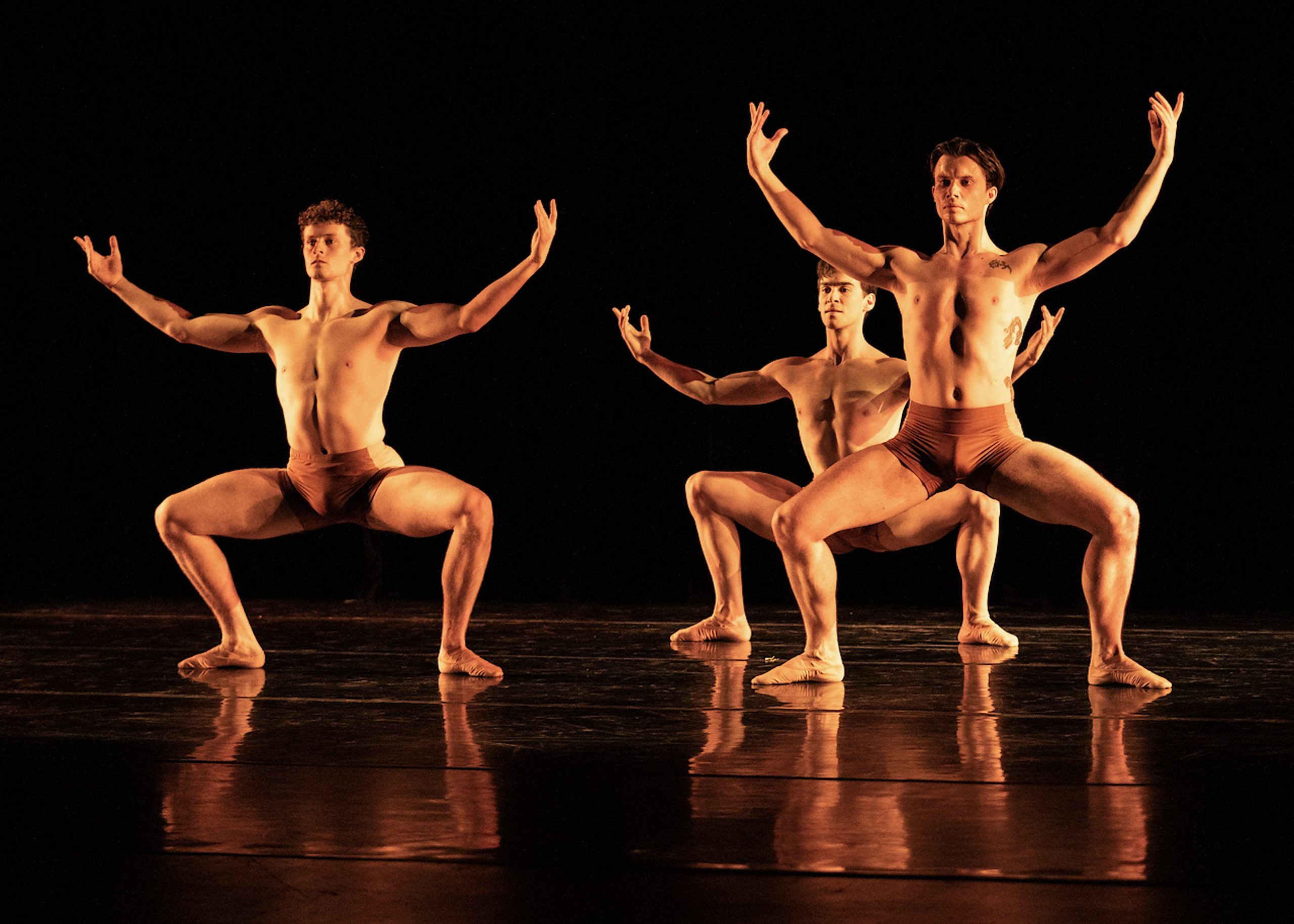
New York City Ballet as “idea” was a sort of undercurrent throughout the program, and current NYCB director Peter Martins’ Les Gentilhommes, to music of Handel, revealed ways in which the Balanchine tradition has been upheld by subsequent generations. It is a florid, low-boil piece for nine men in good-natured struggle who break off into a variety of smaller ensembles. Martins proves himself to be highly musical in passages of imitative fugal textures; the men’s movements are forceful but never “macho.” Still, the piece seems to go on a tad too long. Yoshiya Sakurai danced remarkable solos; through all of his fluid, fanciful movements was an underlying stillness that was a joy to watch.

The finale was the witty and visually sumptuous Souvenirs by the late Todd Bolender, the former Balanchine dancer and KCB artistic director who helped bring Our Town’s company to national prominence. It is a zany comedy of opening-and-closing doors that pays homage to silent-era films. Again Kimberly drew attention as the wiggly, seductive, overdressed Vamp. Logan was the debonair Man About Town, Charles Martin played a hilarious Elevator Attendant and Michael Eaton was a heartily energetic Gigolo. Laura Wolfe and Marty Davis sported well against each other as the Bride and Groom. The frothy music by Samuel Barber was played admirably by Kansas City Symphony members in the pit, who were kept quite busy throughout the evening. The night ended with a warm standing-O for Kimberly, who was presented with flowers by KCB artistic director William Whitener; she’ll be feted at a private reception after the May 13th performance.

Masters of American Dance runs through May 13th at the Kauffman Center. For tickets call 816-931-2232 or go to kcballet.com.

To reach Paul Horsley, performing arts editor, send email to phorsley@sbcglobal.net.


REVIEW: Lyric Opera concludes season with witty, attractive production

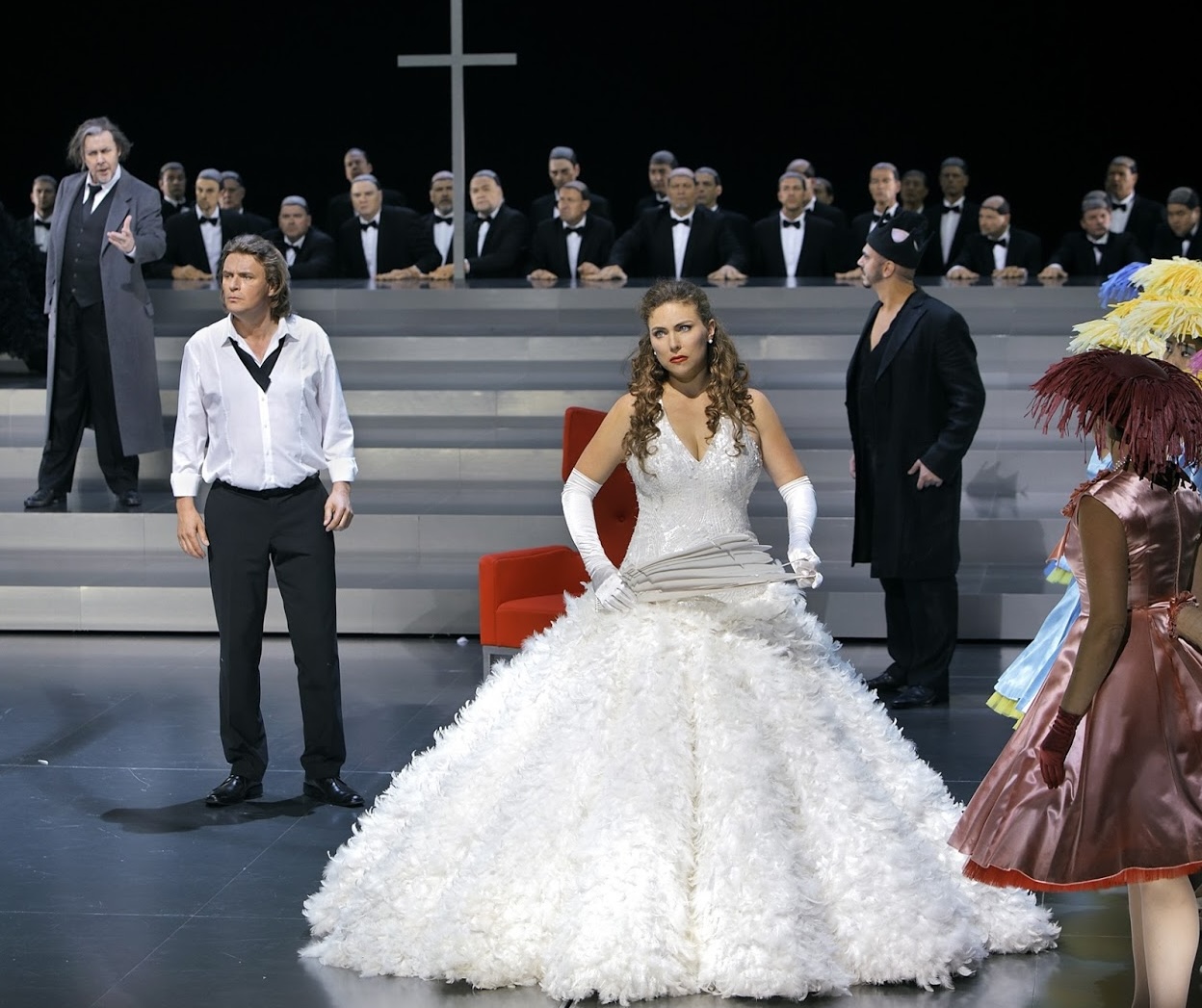
It’s hard to say which opera is the most popular in the repertoire, but The Barber of Seville certainly ranks among the top five. This wittiest of comedies formed a fitting conclusion to what may have been the Lyric Opera’s most distinguished season so far – its first in the Kauffman Center – and the four originally scheduled performances of it were selling so briskly that the company added a fifth. (The show runs through April 29th.) The production is filled with whimsy and slapstick, and on April 23rd the audience laughed quite a bit. With dashingly colorful period set designs by Allen Moyer and tastefully bright costumes by James Scott, the show was especially attractive to look at without being garish. If the comedy seemed at times a bit over-the-top, sometimes to the detriment of the music, it contained some marvelous singing, and the spirit of the piece came through quite boldly.

Director William Theisen works very hard to keep the eye busy, and he succeeds through bustling activity and continuity devices such as Figaro’s and Rosina’s chess game in Act 1, which provides a sort of running gag through the scene. Much of the comedy of Barber grows from the effervescent music itself, and William and his cast have added to that with plenty of playful physical gestures which at times border on the hammy. Some are quite funny, as when Rosina, discovering that Lindoro is actually the Count, turns to the audience with her mouth frozen in an “O” like Lucy Ricardo. Others suffer by repetition: Generally one can do a funny move three times, but after that it begins to lose its punch. At the center of the quirky hijinks was Kevin Burdette as a dandified Bartolo, whom he played with what seemed like a mixture of Nathan Lane, Buster Keaton, Groucho, and I’m not sure what else. During the larger ensembles there was so much going on that the eye was darting about continually, to mostly whimsical effect. The Act 1 finale was a combination of freeze-frames and slow-motion tussle, the latter having become a sort of fashion lately for this scene. This was one instance in which physical humor seems to have trumped the vocalism, as the singers could often barely be heard over the orchestra, and the ensemble among the singers and between singers and orchestra became scattered.

Sandra Piques Eddy brought her beautiful mezzo-soprano to the role of Rosina: It has a rich, plumy lower register and vibrancy throughout. She was ever the saucy ward, taunting Bartolo and flirting with Lindoro; yet at times it felt that this sort of comedy did not come as naturally to her as, say, the earthy torchiness that made her Carmen last season so memorable. Brian was a heroic Count, walking a careful line between wit and a nobleman’s poise. His voice has a pleasing midrange but sometimes grows pinched at the top, and it’s not always as nimble in rapid passages as one might hope. Kevin displayed a warm, lovely bass as Bartolo, when he wasn’t toying with its timbre for comic effect. Arthur Woodley’s rich, oaken bass was perfect for Basilio, and he assumed well the character’s sort of affected sophistication. Holly White was a jovial Berta, and Brad Walker sang the small role of Fiorello with a warm bass-baritone that we’d like to hear more of. But it was Joshua Hopkins in the title role who virtually stole the show. His world-class baritone is simply a delight to listen to: mellow and crisp, naturally supported, and well-outfitted in its whole range. He was a confident presence onstage who avoided buffoonery and yet always made it clear that Figaro was, in fact, in control of everything.

Ward Holmquist conducted the Kansas City Symphony in a musically astute rendering of the score, despite ensemble issues with the singers. The chunk-chunk-chunk-chunk of the strings in the Overture had a dynamism that set the tone for the evening, and the Muriel Kauffman Theatre provided an ideal acoustic.

To reach Paul Horsley send email to phorsley@sbcglobal.net or call 816-471-2800, Ext. 204.


REVIEW: Tenor displays suave lyricism, broad emotional range

Italian tenor Giuseppe Filianoti possesses a clear, honest voice that is imbued with pathos and a sort of sunny heroism in the upper range, as well as firm pitch control overall. But his real strength is his wide emotional range, which can embrace everything from sorrow to ebullience, resignation to determination. The full breadth of his gifts was on display at his Harriman-Jewell Series recital on April 21st at the Folly Theater, his first solo recital in America and the latest of a distinguished series of debuts presented by the Harriman organization. It was an intimate, personal affair consisting chiefly of Italian songs and arias drawn from the late-Romantic repertoire for which his voice seems particularly well-suited. If his lower and middle range proved to be less intense or convincing than his top, and if his recital repertoire had a sort of sameness to it, Filianoti is a singer of fine musical instincts, and he is considered one of the leading lyric tenors today, especially in the Italian and French repertoire.

In the set of works by Cilèa that opened the program, he showed solidity of purpose in the “Serenata,” tenderness in “Alba novella,” and defiance in “Lontananza!” He concluded the set with “La dolcissima effigie,” an aria from Cilèa’s celebrated opera Adriana Lecouvreur, and although the initial attack was shaky he effectively conveyed, through gestures and vocal vibrancy, the sentiment (“I see the very sweet and smiling face of my dear mother when I look at you”). The set of Tosti songs that followed included several well-known items, and here Filianoti’s emotional range was always apt to the moods of gloom (“Tristezza”), nostalgia (“Non t’amo più) or whimsy (“ ’A vuccella”). He was less convincing in the Pietri aria from Maristella, despite his exuberant conveyance of the text (“Come away with me!”).

The two Respighi songs that opened the second half of the program were hauntingly beautiful, revealing instantly the difference between pretty good composers and really good ones. Especially of note here was pianist Craig Terry’s sharply sensitive rendering of the dark, almost Impressionistic piano parts, even though here as throughout one sometimes wished his pianissimos were a little less inward.  Filianoti imbued “Nebbie,” the second of the two, with a beautifully desperate sadness. With the three Petrarch songs of Pizzetti that followed, we went on a sentimental journey that seemed at times uneventful, though the singer showed a strong connection to the mostly melancholy flavor.

After another brief aria from Adriana Lecouvreur (“L’anima ho stanca”), Filianoti launched into a set of four Strauss songs. “Allerseelen” was fine, but the subsequent “Morgen” was performed at a glacial tempo that strained the ear’s ability to follow the line. The musical partners were stronger in “Befreit” and “Zueignung,” though the tenor seemed to be a bit less in his element here overall. The encores included a jovial “O sole mio,” which he interpolated with a series of superfluous trills, and a ringingly beautiful “Non ti scordar di me,” where he was very much back in his triumphant comfort zone.

To reach Paul Horsley, send email to phorsley@sbcglobal.net or call 816-471-2800, Ext. 204.


REVIEW: Unicorn production of ambitious war drama rides on fine direction, choice performances

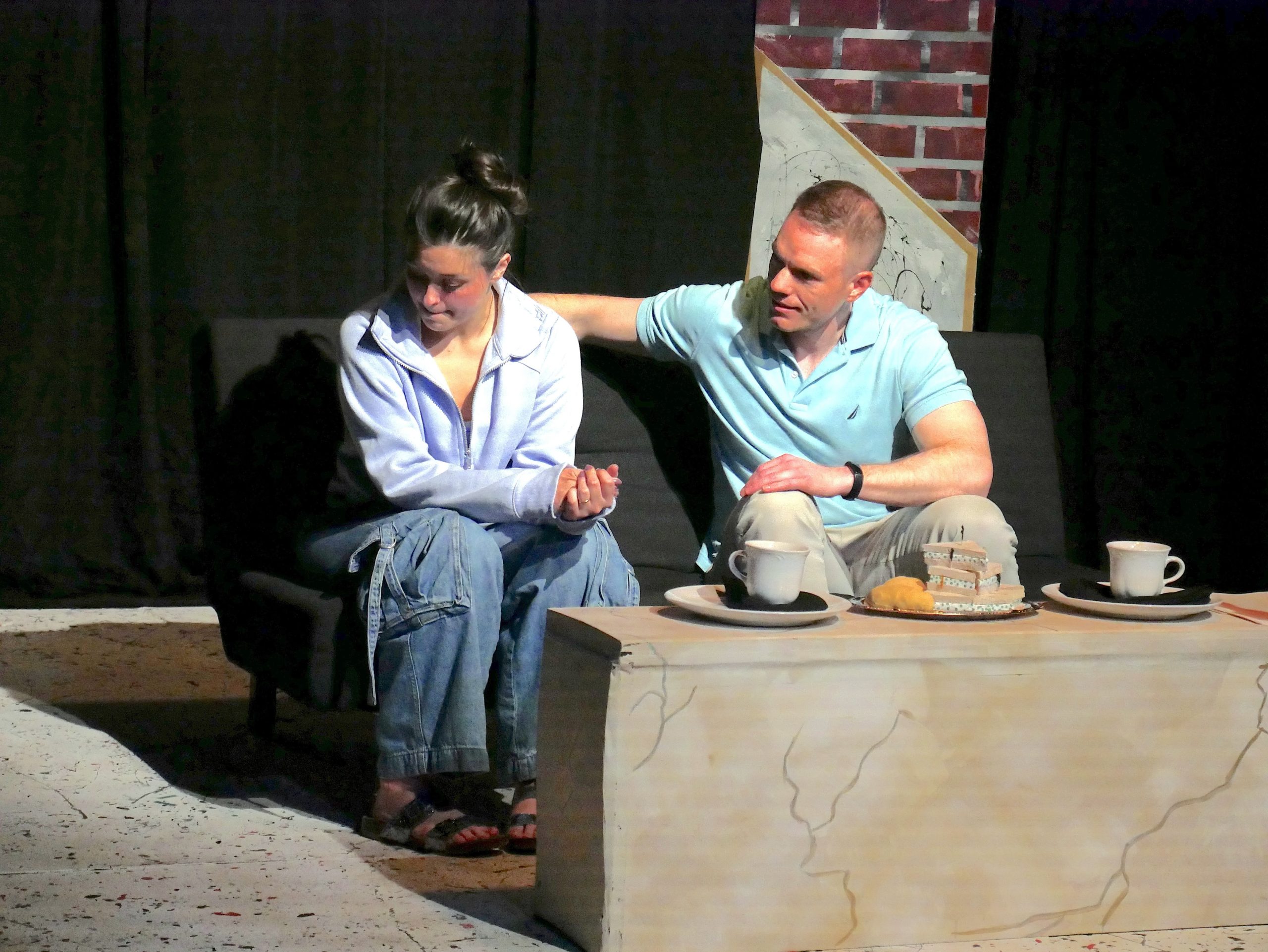
During the second Iraq war that began in 2003 we had plenty of movies, books, plays, documentaries and news stories about the impact of the war on those who fought it, and on the Iraqi people who lived through it. But there’s been relatively little that deals with the impact of the war on the brave journalists who also risked life and limb, which is significant because many of their lives, too, were shattered by battle trauma, injury or worse. Donald Margulies’ notable play Time Stands Still, which runs through April 29th at the Unicorn Theatre, examines the effect of the war on Sarah (Carla Noack), a brilliant photojournalist who has nearly died from a roadside bomb, and her boyfriend, James (David Fritts), who has suffered a sort of PTSD from a gruesome explosion he witnessed. Along the way the play, which was nominated for a 2010 Tony Award, asks big questions about the role of the journalist in recording the horrors of war, and the role of “truth” for those of us who do not suffer from it directly. At the same it dissects a couple’s bitter struggle to stay together and rebuild their life.

At the center of the maelstrom of this two-hour domestic drama – which takes place entirely in the couple’s Brooklyn loft (a handsome, economical uniset designed by Jason Coale) – is Sarah, whom we first see in a terrible state upon her return from weeks of hospitalization overseas. One side of her face is deeply scarred, one arm is broken, and her right leg has had to be completely reconstructed. Despite her exhaustion her fierce spirit shines through – and how! – and Carla’s gritty performance helps make it the core of the play’s inner workings. David seems a bit soft-at-the-center at the outset, but his portrayal of James grows in intensity throughout, culminating in the eruptive final scenes with Sarah. (Warning: There are enough F-bombs in these scenes to fill a squadron of Nighthawks.) Their friends, the other half of this stripped-down drama, are Richard (Mark Robbins), a middle-aged photo editor, and Mandy (Ashlee LaPine), his much younger girlfriend and soon-to-be wife. The author tries to build a complex dynamic between the two couples, as Sarah mocks Richard for his trophy girlfriend and Richard goads James into writing about his time in Iraq despite his traumas there. Mark is his usual solid, well-centered presence as Richard, and Ashlee is deliciously over-the-top as the giggling airhead in Act 1 who becomes a quieter, more determined presence as his pregnant wife in Act 2.

Sidonie Garrett’s excellent direction is naturalistic and unobtrusive in such a way that you’re never aware of “directing.”  There are standout moments in Time Stands Still, such as Mandy’s witty initial scene (with Sarah’s vitriol), or the revelations about what happened in Iraq after James returned home prematurely, or (in particular) the opening of Act 2, in which James derides a war-themed theatrical presentation they’ve just attended in which, as he views it, people have paid $100 to weep and suffer and shout Bravo! and then “go home feeling like they’ve actually done something, when in fact all they’ve done is assuaged their liberal guilt!” It’s a clever construct, not without humor, in which the author has turned a mirror toward the “fourth wall” – toward us, the audience, as if to suggest that we, too, might be engaged in the same thing at that very moment. But in the end Donald’s play tries to take on too many elements – atrocities of war, journalistic ethics, infidelity, sexual midlife crisis, the lure of the “noble savage,” the struggle between career and relationships – without a consistent sense of how all these elements mesh. It is at its best when it is confronting the big issues of war and “truth,” weakest when it breaks down into petty domestic squabbles. We’re left with a feeling of “What is this play really about?”
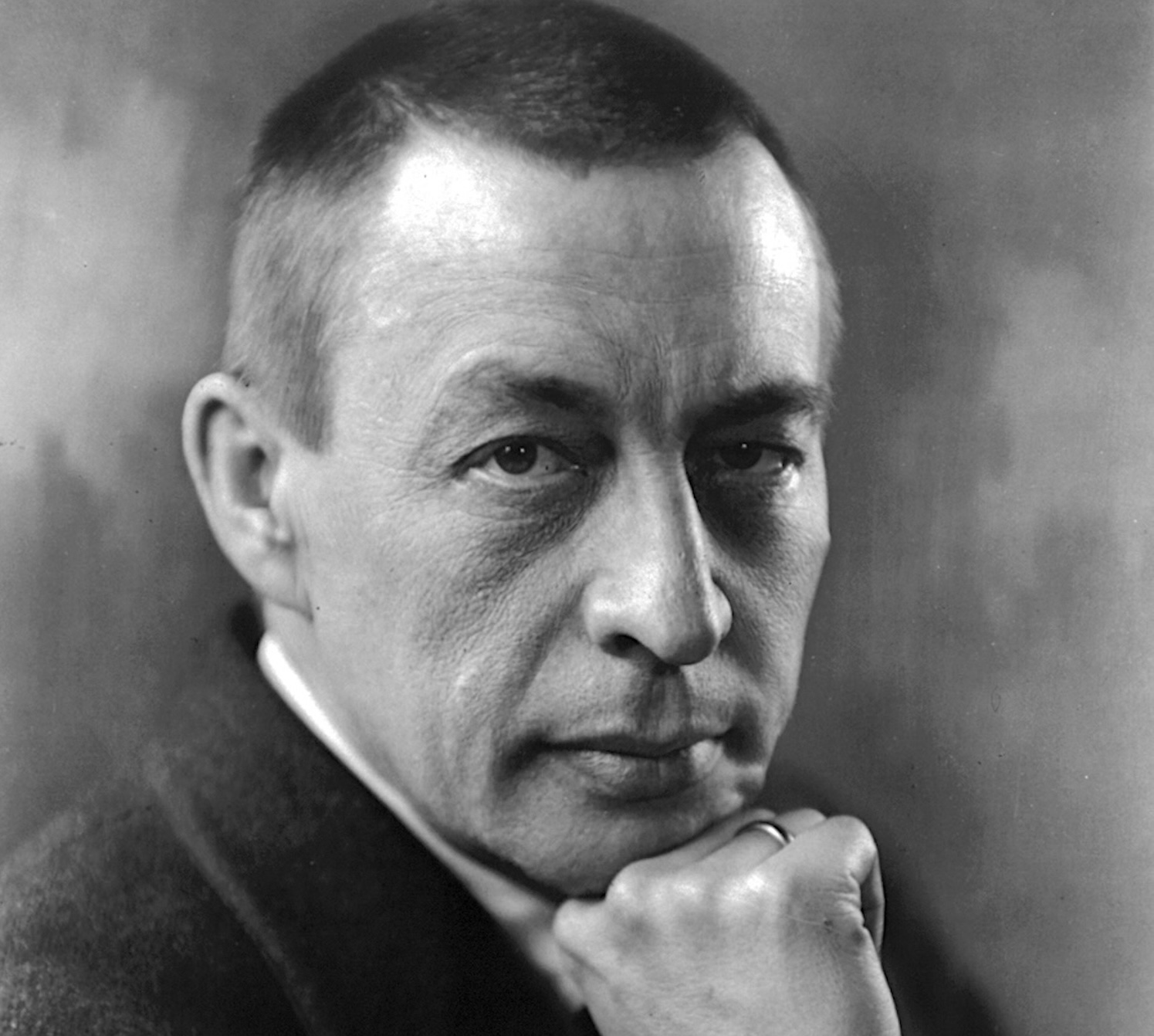
Time Stands Still runs at the Unicorn Theatre until April 29th. For tickets and more information, including a rundown on the company’s 2012-2013 season, call 816-531-PLAY or go to unicorntheatre.org.

To reach Paul Horsley, performing arts editor, send email to phorsley@sbcglobal.net or call 816-471-2800, Ext. 204.


SHAVE AND A BIG LAUGH: Lyric closes season with classic Rossini opera

Sure The Barber of Seville is a frothy, wry and at times deliciously silly comedy. But it can’t be played as pure farce, says William Theisen, who directs the Lyric Opera’s production opening on April 21st at the Kauffman Center. “These characters cannot be cartoons,” said the director. “You do have a heightened reality here, and certainly Bartolo is very much a buffo character. But you have to care about these people.” The key to making this most popular of Rossini’s operas memorable is in “rooting the characters in an honest place,” says William, whom Lyric audiences will remember from his H.M.S. Pinafore in 2009, “really making them three-dimensional characters and then placing them in these larger-than-life situations, which is where the comedy can be created.” Rosina, for example, desperately wants to get out of having to marry the aging Bartolo (sung by bass Kevin Burdette here), who is

keeping her as his “ward,” so that she can take up with her real love, Lidoro. Lindoro (the wealthy Count Almaviva in disguise, sung here by Brian Anderson in his Lyric debut) is madly in love with Rosina — it might even be his first true love. Figaro is the lightest-weight character, and the one with the simplest motive (money), but even he has another side: His plots to get the lovers together are devised not purely for money but also out of a genuine sense of friendship.

Much of the substance of the opera, which was first performed in 1816 in Rome, grows from the uncertain fate of the lovely Rosina, the only major female in the show and one of the great mezzo-soprano roles in the repertory. “She’s such a delicious character,” says the Lyric’s Rosina, Sandra Piques Eddy, who wowed Lyric audiences in 2010 with her portrayal of Carmen. “She’s young, she’s exuberant, she’s wily, charming, witty, sassy, determined — but a little manipulative. She knows how to turn on the charm, how to ‘work it.’ Her first aria (the famous “Una voce poco fa”) is a great introduction to her personality, because she describes herself: I’m docile, I’m respectful, I’m obedient, I’m sweet and loving … but watch out if you cross me, then I become a viper.”

Count Almaviva, who has disguised himself as a poor student so that Rosina will love him for himself, also has his semi-serious side. “The charming thing about the Count here,” William says, “is that he is really so in love with Rosina that he will do anything, take up ­any of these crazy ideas Figaro tells him — you’ll be a soldier, you’ll be a music-teacher. He’s willing to do anything.” And even Figaro has his tender side, in the form of his sort of platonic love of Rosina, which motivates him to do all he can to get her out of Bartolo’s clutches. He also happens to be the pivotal cog in the clockwork-like plot, which is why the opera is named after him and not the lovers. “Everything that comes about happens because of Figaro, says baritone Joshua Hopkins, who is also making his Lyric debut as Figaro. “I think Beaumarchais (the author of the play on which the opera is based) chose that title because it’s really about the manipulations and machinations of Figaro’s character, and his skill in arranging everything so that it goes smoothly. … Figaro is very central in the operations.”

And speaking of machinations, William says that his is a fairly physical production, which will keep not just the ears but the eyes busy as well. “Of course you can definitely never be so physical that the singers can’t sing this incredibly complex music. … But I’m personally not a big fan of the stand-and-sing type of opera. … And this music makes you want to move, there is so much fluidity and so much motion in the music. I really think you have to take your cue from Rossini, who wrote this wonderful music that makes you want to move.” The singers, too, find that music and movement go hand in hand, and fortunately today’s singers are younger, svelter and more athletic than ever — because they have to be. Sandra says that when she’s trying to explain to non-musicians what it’s like to sing Rossini these she says it’s a little like vocal Olympics. “You have to have a good, wide, solid range, you have to have technique, you have to have the coloratura, the ability to move your voice very quickly and cleanly — and you also have to have ‘the line.’ … I’m just flattered that I’ve been getting a lot of Rossini work, because it’s a great challenge to keep your voice fresh and flexible.”

Opera is not sport, of course, it is an art form that has to touch the heart and the mind. “I still fully believe that no matter how beautiful the production is, opera is still really about the singing and the music and the text, and us connecting to that text on some emotional level,” says Josh, who as Figaro gets to sing what is perhaps the most famous aria in all of opera, the virtuosic “Largo al factotum” (Figaro, Figaro, Fi-ga-ro). And speaking of vocal art, Williams says he is happy that the Lyric is using a mezzo-soprano for Rosina. “I never quite understand when a soprano is cast as Rosina. To me it was written for a mezzo, and there are not that many big roles for mezzos out there. I love when a lovely mezzo is singing Rosina … because I think it really grounds the character more.”

The Lyric’s production of Barber of Seville also includes Brad Walker as Fiorello, Holly White as Berta, Arthur Woodley as Don Basilio and Dominic Johnson as the Sergeant. Artistic director Ward Holmquist conducts the Kansas City Symphony. The show runs from April 21st through the 29th at the Muriel Kauffman Theatre. For tickets and more information call 816-471-7344 or go to kcopera.org.

 To reach Paul Horsley, performing arts editor, send email to phorsley@sbcglobal.net.